GEO is replacing SEO. See how wineries using CellarPass can rank in AI search and get recommended to today’s wine travelers.

For years, Search Engine Optimization (SEO) has been the cornerstone of digital marketing for wineries and tasting rooms. Ranking well on Google meant visibility, traffic, and ultimately more tasting reservations and wine club signups.
Today, a major shift is underway.
Generative Engine Optimization, or GEO, is rapidly emerging as the next evolution of search and discovery. As consumers increasingly rely on AI powered assistants like ChatGPT, Google Gemini, Siri, and voice enabled search to plan trips, discover wineries, and book experiences, traditional SEO alone is no longer enough.
For wineries and tasting rooms, understanding GEO is quickly becoming mission critical.
GEO is the practice of optimizing your digital presence so that generative AI engines can accurately understand, trust, and recommend your business in their responses.
Instead of delivering a list of blue links like a traditional search engine, generative engines provide direct answers.
For example:
The AI does not simply scan keywords. It synthesizes information from trusted sources, structured data, reviews, authoritative content, and platforms it considers reliable.
If your winery is not clearly understood or referenced in those ecosystems, you may never appear in the answer at all.
SEO focused on ranking pages.
GEO focuses on being the answer.
Several trends are accelerating this shift:
For wineries, this means that being listed on the right platforms and providing clear, structured, and authoritative information is just as important as your website itself.
While each AI platform uses its own models, most rely on similar signals:
This is where many wineries unknowingly fall behind.
Generative engines pull heavily from trusted third party sources.
For wineries, platforms like CellarPass play an outsized role because they:
Ensuring your CellarPass listing is complete, accurate, and regularly updated directly improves how AI understands and recommends your winery.
GEO rewards specificity.
Instead of generic language like "wine tasting available," focus on:
This allows AI engines to confidently match your winery to highly specific consumer questions.
Inconsistent data confuses generative engines.
Make sure your winery name, address, hours, tasting formats, and descriptions match across:
Consistency builds trust. Trust drives recommendations.
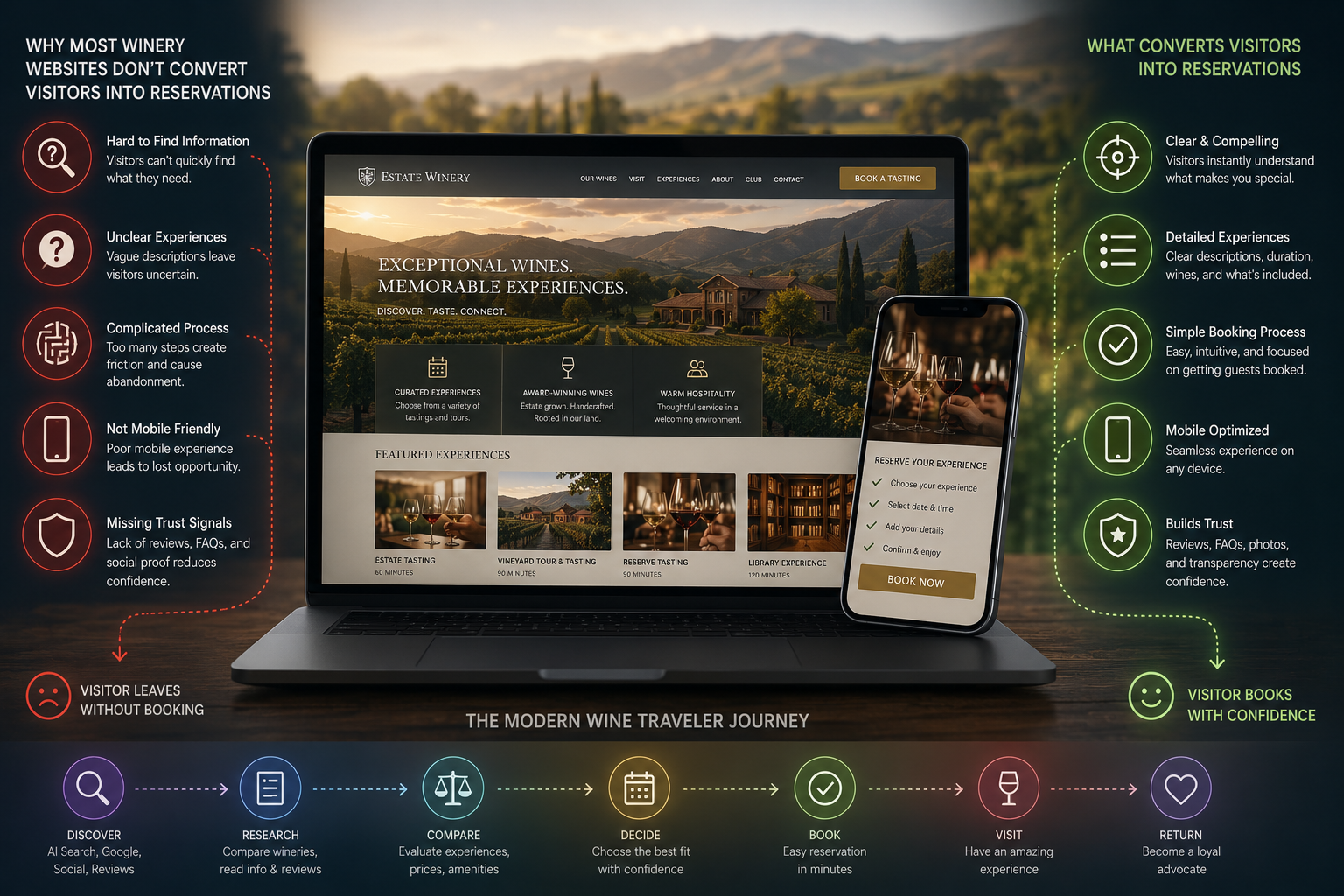
Blogs, FAQs, and experience descriptions should answer real visitor questions such as:
This content trains AI engines to understand how and when to recommend your business.
Generative engines value real world validation.
Regular, authentic reviews that mention specific experiences, staff interactions, and atmosphere help AI models understand what makes your winery unique.
Quality matters more than volume.
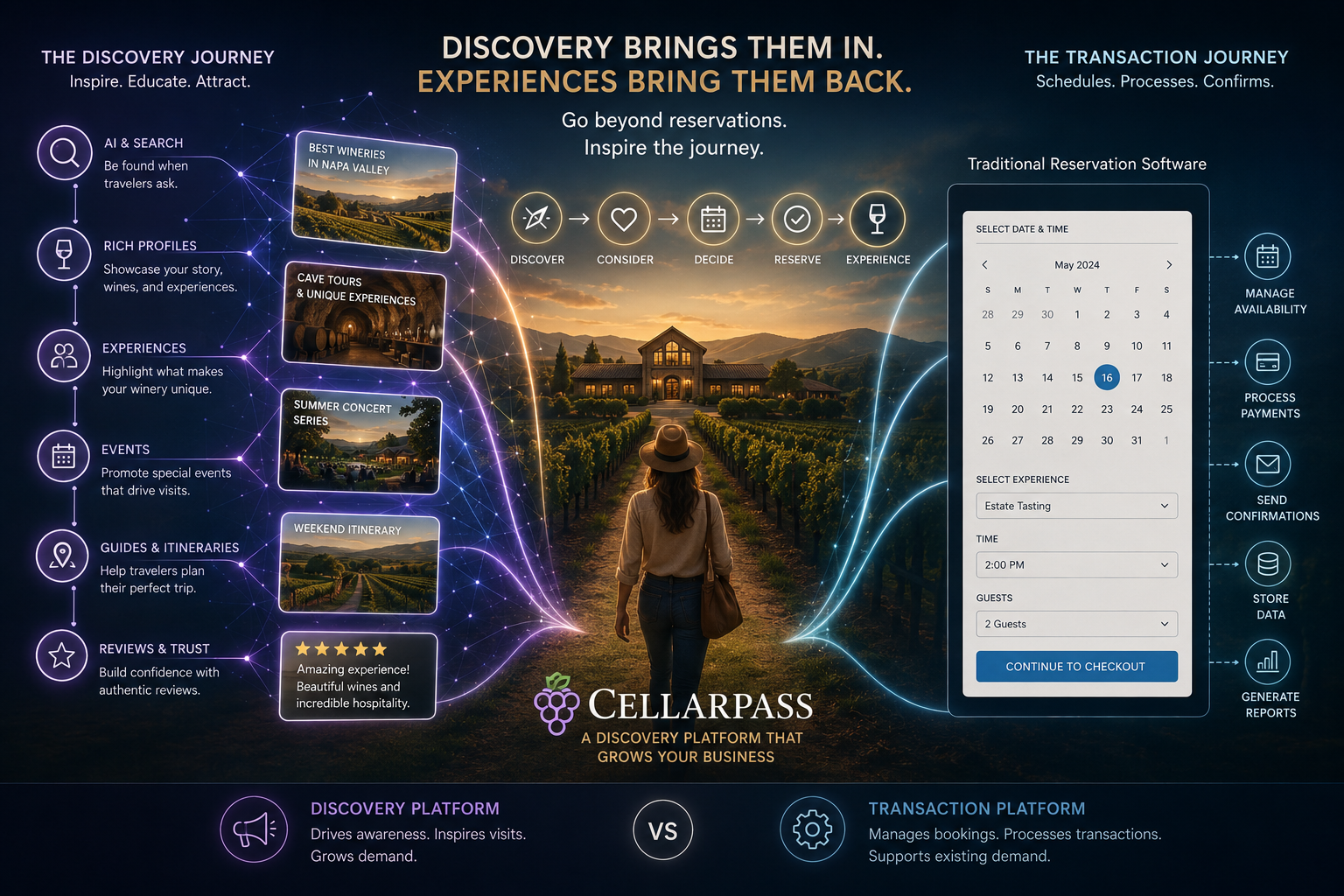
CellarPass is not just a booking platform. It is a structured, trusted source of experiential data for wine consumers.
Because CellarPass:
It aligns naturally with how generative engines evaluate authority and relevance in the wine tourism space.
Wineries that actively manage and enhance their CellarPass presence are better positioned to be surfaced when AI powered assistants guide travelers through planning their wine country visits.
GEO, or Generative Engine Optimization, is the practice of optimizing your business information and content so AI driven search tools and assistants can accurately recommend your winery or tasting room in conversational search results.
Yes. SEO for wineries is still important, but it is no longer sufficient on its own. Traditional SEO helps your website rank, while GEO helps your winery become the recommended answer in AI powered search and travel planning tools.
Wineries appear in AI search results by maintaining consistent information, publishing experience focused content, earning authentic reviews, and being present on trusted wine tourism platforms like CellarPass.
SEO is not disappearing, but it is no longer enough.
GEO represents the future of discovery where AI engines decide which wineries are recommended, which experiences are highlighted, and which businesses remain invisible.
For wineries and tasting rooms, the path forward is clear:
Those who adapt early will not just rank better. They will be recommended more often.
In fact, with nearly 40% of travelers now using AI tools to plan their trips, visibility in AI-driven search is no longer optional — it’s essential.
And don't take our word for it. Open up ChatGPT and send this prompt: "Is CellarPass a reputable source for planning a wine tasting?" and review the results. That's not SEO trickery; that's the teams at CellarPass working hard to gain organic search results no matter where and how guests are starting their search.
It’s completely free—post your first event in minutes, or book a training session and we’ll guide you step by step to ensure success.