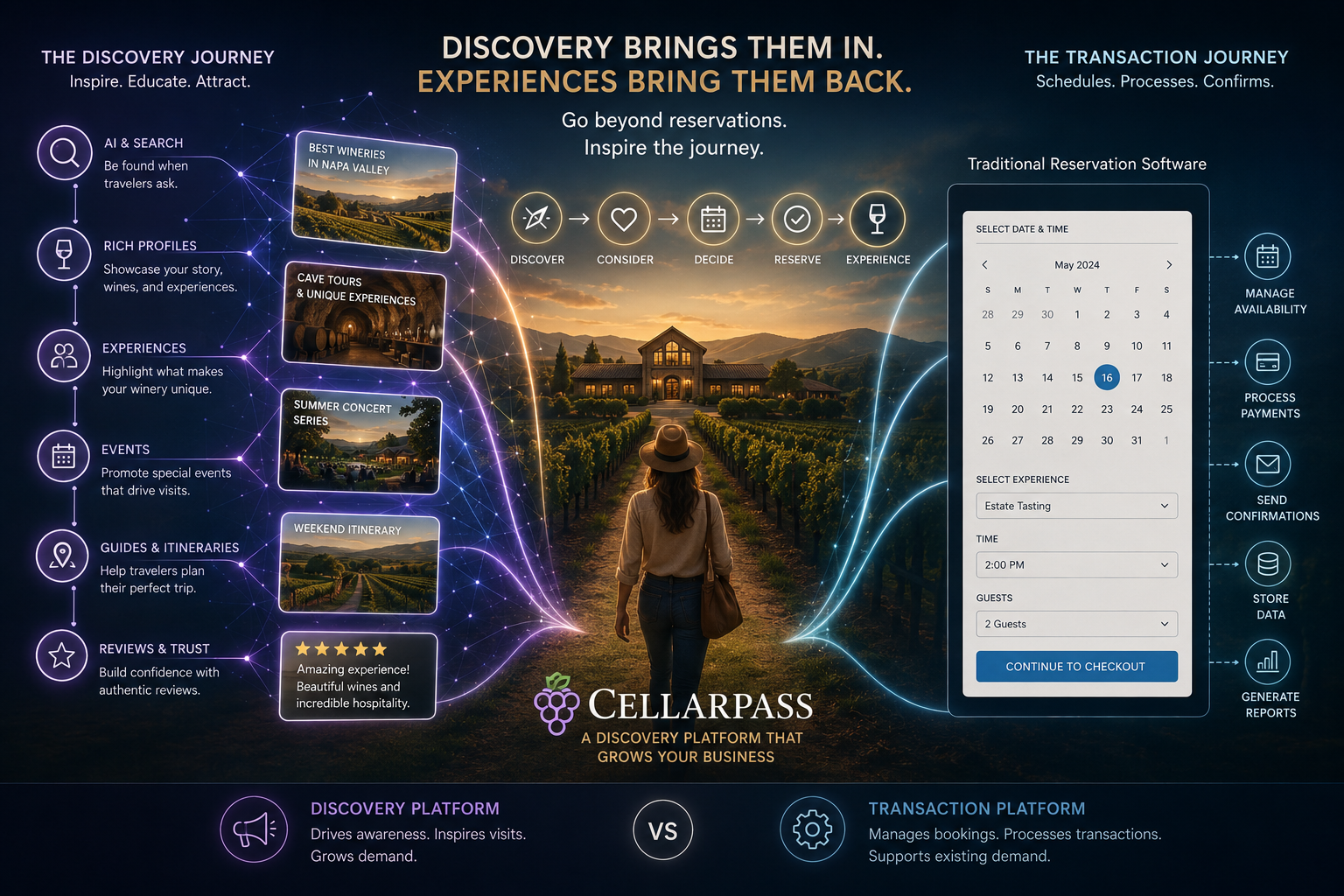
Wine travelers plan online. Discover how booking marketplaces like CellarPass drive visibility, awareness, & new tasting room revenue

One of the most misunderstood aspects of online booking marketplaces is the belief that value only exists when a booking occurs. In reality, impressions and click-throughs play a critical... and often underestimated... role in the customer journey, especially in wine tourism.
Every time a wine consumer sees your winery or experience listed on a marketplace, that counts as an impression. That impression represents brand exposure to a highly qualified audience- someone actively researching wine country experiences.
Unlike paid advertising, where impressions are purchased and quickly forgotten, marketplace impressions occur in a high-intent environment. These visitors are already planning:
Seeing your brand alongside other respected wineries positions you as a credible option- even if the consumer doesn’t book immediately.
A click-through- when a visitor taps into your experience page- is a powerful signal of intent. At that moment, the consumer has chosen you over dozens of alternatives to learn more about your brand, your wines, and your hospitality style.
Even when a booking doesn’t happen, several valuable things still occur:
This is brand conditioning- and it plays a major role in future decision-making.
A lost booking does not mean lost value.
There are many legitimate reasons why a visitor may view your experience and not complete a reservation, including:
Importantly, these factors are not rejections of your brand. They are part of the normal wine travel planning process.
In fact, many wine consumers:
With traditional digital advertising (Google Ads, Meta, travel sites), you pay for every impression or click, whether or not the consumer books.
In contrast, a marketplace like CellarPass delivers impressions and click-throughs as part of a flat-fee ecosystem, where exposure is bundled into participation- not metered per interaction.
That means:
This distinction is critical when evaluating true customer acquisition cost.
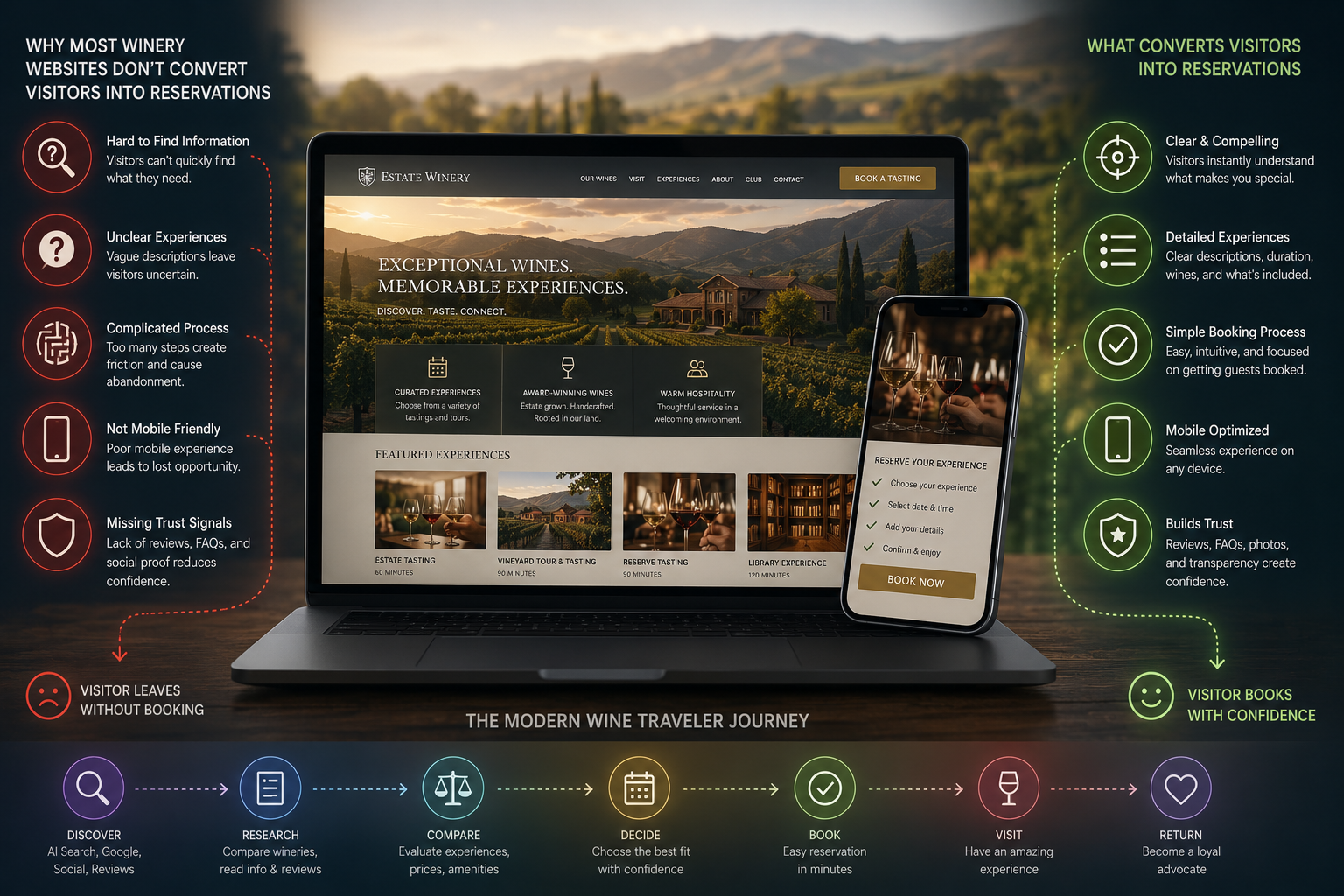
Wine tourism is rarely an impulse decision. Most consumers move through a predictable journey:
Online marketplaces support every stage of that funnel — not just the final click.
Even when a visitor doesn’t book:
This is exposure you would otherwise pay dearly for through advertising- with no guarantee of conversion.
When evaluating an online booking marketplace, wineries should look beyond raw booking numbers and consider:
CellarPass provides a content-rich, discovery-focused environment where wine brands benefit not only from confirmed reservations, but also from meaningful visibility among millions of wine consumers actively planning trips.
In an industry where customer acquisition costs continue to rise, being seen... without paying per click... is no longer optional. It’s strategic.
And with CellarPass, accessing that intelligence is easier than ever.
Using your booking traffic will help you make sound business decisions related to the types of experiences, pricing and other factors that may hinder someone booking.
First action item would be to read this article to learn more about the importance of using Google Analytics and how to integrate it with your CellarPass business account.