How to choose winery reservations software that drives visits, clubs, and growth.

Choosing the right winery reservations software is one of the most important decisions a tasting room manager or businesses owner can make. The platform you select impacts far more than booking appointments. It influences guest experience, staff efficiency, customer acquisition, club growth, and long-term revenue.
With an increasing number of tasting room reservation platforms on the market, many originally built for restaurants or generic hospitality, wineries must ask deeper questions before committing. This guide outlines the most important questions to ask when evaluating a winery reservations platform, helping tasting rooms choose a partner that truly understands wine hospitality and wine tourism.
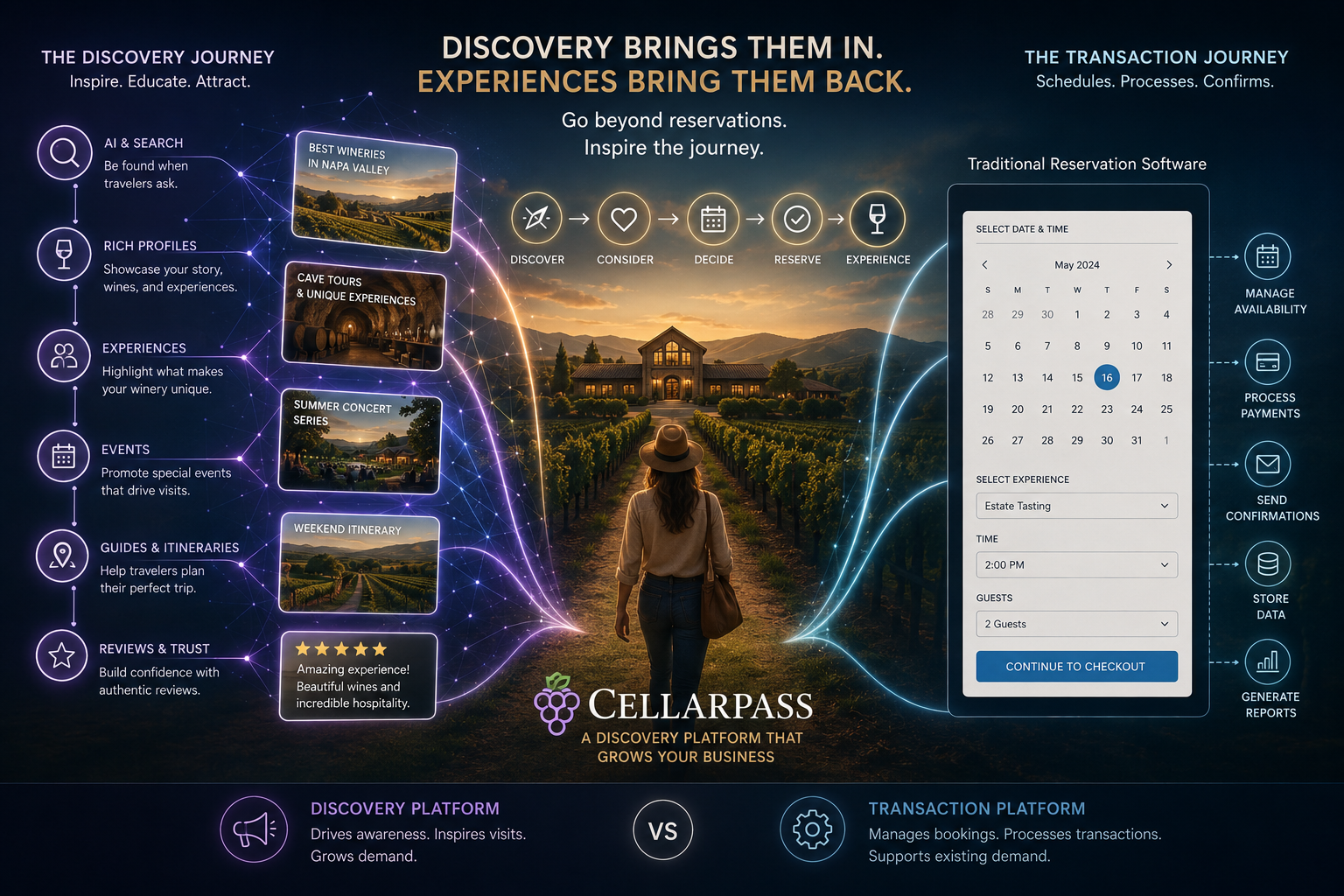
Not all winery booking systems help grow your audience.
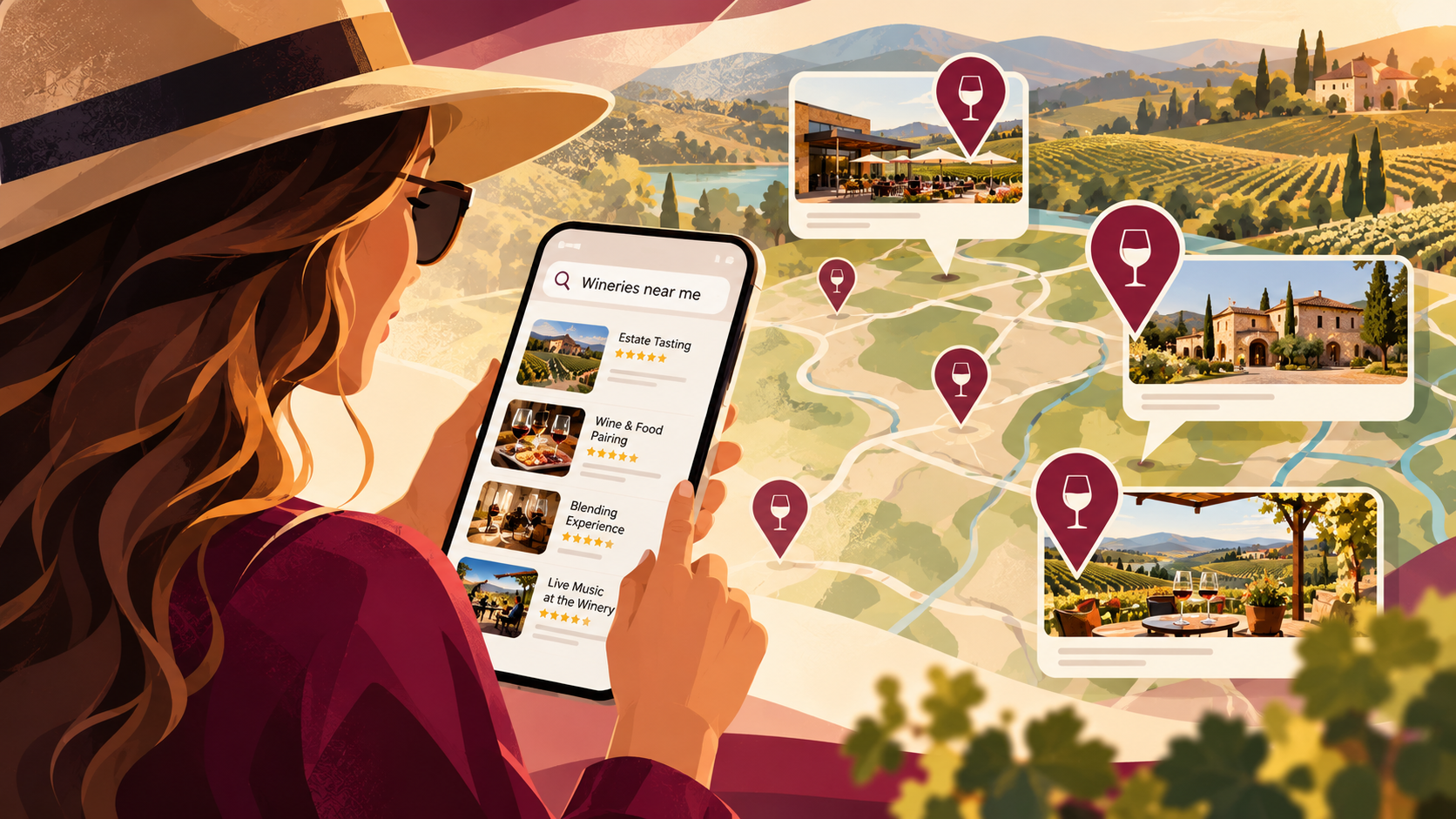
Some platforms only manage reservations for guests who already know your brand. Others actively promote your tasting experiences to wine consumers who are planning trips, exploring wine country, or looking for things to do nearby.
Ask whether the platform functions as a discovery and marketing channel, not just a scheduling tool.
Key questions to ask:
The best tasting room reservations software does more than accept bookings.
Marketing capabilities should be built into the platform, not bolted on later. Look for tools that help promote experiences, events, and seasonal offerings to consumers who are already in a wine-tasting mindset.
Marketing features to evaluate include:
A reservations platform should help create demand, not just organize it.
Many reservation systems claim to support wineries but were designed for restaurants, salons, or tour operators.
A winery-focused reservations platform should reflect how tasting rooms actually operate, including hosted tastings, seated experiences, walk-ins, wine clubs, industry visits, and special events.
Ask directly:
This is a critical question that many wineries overlook.
Ask whether the reservations platform integrates directly with your club management system to automate:
Manual workarounds create friction for staff and frustration for members. A fully integrated system protects the club experience while reducing operational complexity.
Your reservations platform should not treat club growth as someone else’s problem.
Ask whether the platform supports:
The best winery reservations software helps turn great visits into long-term relationships.
Floor plans can be useful in some tasting rooms, but they are not right for every winery.
Many reservation platforms originally designed for restaurants rely heavily on fixed floor plans and table assignments. While this works for restaurants, it often creates unnecessary friction in a tasting room environment.
Restaurant-based platforms typically require you to assign a specific experience to a specific table. If one or two tasting experiences are highly popular while others are not, those assigned tables will fill quickly while other tables sit empty. The result is an underbooked tasting room and staff forced into constant manual adjustments just to maximize capacity.
Wineries operate differently than restaurants. In a tasting room, the experience is the primary offering, not the table. Guests choose their tasting experience first, and hospitality teams seat them wherever space allows. Restaurant systems are built around the opposite model. They offer tables first, with the “entree” chosen after guests are seated. When these systems are adapted for wineries, experience selection becomes an afterthought rather than the foundation of the visit.
The best winery reservations software allows floor plans to be optional and supports flexible seating. This ensures that any experience can be hosted at any available table, helping wineries avoid empty seats, reduce staff workload, and deliver a smoother guest experience without constant manual jockeying.
Many wineries host ticketed events, from release parties to winemaker dinners.
Ask whether the reservations platform includes ticketing features such as:
Using separate systems for tastings and events often leads to duplicated work and fragmented guest data.
Adopting new winery reservations software impacts every member of your team.
Ask how onboarding is handled and whether training goes beyond basic platform functionality. Strong partners provide education that helps tasting rooms operate better, not just click the right buttons.
Important considerations:
This is where true partners stand apart.
Ask whether training includes:
A reservations partner should help you stay informed, not leave you to figure it out alone.
A true winery reservations partner shows up.
Ask whether the company attends wine industry events, passport weekends, regional tastings, and wine tourism conferences. Active participation signals industry understanding and long-term commitment.
Look for:
Local partnerships matter.
Ask whether the platform collaborates with your regional winery association or tourism organization. Platforms that work at the association level often help drive collective visitation, passport programs, and regional awareness.
This can directly benefit:
This question reveals how actively the platform evolves as your guests' booking behaviors change, too.
Ask what feature was released most recently, when it launched, and what winery-specific problem it solved. Strong answers show innovation driven by winery feedback, not generic software development.
Follow up with:
The best winery reservations platforms define success in winery terms.
Ask how they measure success and what outcomes they track, such as:
A true partner should clearly articulate how they help wineries grow.
Your winery reservations software should function as an extension of your hospitality team, your marketing engine, and your club growth strategy.
By asking these questions, wineries and tasting rooms can avoid rigid systems, disconnected tools, and generic platforms that do not understand wine hospitality. The right reservations partner supports flexibility, drives new customers, strengthens club relationships, and evolves alongside your business.
Choosing wisely today can shape your tasting room’s success for years to come.
The best winery reservations software is built specifically for tasting rooms, integrates with club management systems, supports flexible seating, and helps attract new customers.
Yes. Winery-focused platforms can promote club-exclusive experiences, automate member benefits, and help convert first-time visitors into members.
No. Many wineries prefer flexible seating. The best platforms make floor plans optional rather than mandatory.
Yes. Some platforms actively market tasting experiences to wine consumers and help drive discovery beyond a winery’s own website.