Discover 5 proven wine club retention strategies to increase tasting room visits, improve loyalty, and grow winery revenue in 2026.

Wine club retention strategies are no longer just about reducing cancellations. In 2026, the real growth opportunity lies in increasing winery visits and deepening in-person engagement.
For wineries using platforms like CellarPass, the wine club should function as a traffic driver, not just a fulfillment system.
If your members are receiving shipments but not visiting your tasting room, you are leaving revenue, loyalty, and referrals on the table.
Here are five proven wine club retention strategies designed specifically to increase winery visits and long-term member value.
One of the most effective wine club retention strategies in 2026 is replacing large generic pickup parties with smaller, high-value micro-experiences.
Examples include:
Why this increases winery visits:
Scarcity and exclusivity drive behavior. Members will schedule trips when they feel access is limited and personal.
This approach works especially well in competitive regions like Napa Valley and Paso Robles, where differentiation is critical.
SEO focus: wine club event ideas, exclusive winery experiences
Modern winery marketing strategies in 2026 rely on direct communication channels. SMS consistently outperforms email in open rates and immediacy.
Instead of generic campaigns, use SMS to:
This improves wine club member engagement because the message feels personal and timely.
When integrated with your booking system, SMS can trigger invitations based on behavior such as last visit date or purchase history.
SEO focus: winery marketing strategies 2026, wine club member engagement
A static wine club does not motivate repeat visits. A dynamic loyalty structure does.
Consider implementing a tiered tasting room loyalty program:
This transforms your wine club from a subscription into a participation model.
Members begin planning trips intentionally to reach the next level.
This is one of the most underutilized winery membership retention strategies because it rewards behavior that directly increases on-site revenue.
SEO focus: tasting room loyalty programs, improve wine club visitation
Instead of offering a passive 30-day pickup window, structure pickup periods as curated events.
Examples:
Structured reservations through your booking system allow you to:
When pickup becomes an event rather than an errand, winery visits increase naturally.
SEO focus: wine club pickup events, increase winery visits
In 2026, personalization is a competitive advantage.
Before a member arrives, your tasting room team should know:
Small personalization tactics dramatically improve winery membership retention:
When members feel recognized, they return more often.
Data-informed hospitality is one of the most effective long-term wine club retention strategies available today.
SEO focus: winery membership retention, personalized tasting room experience
Many wineries focus exclusively on reducing churn. The stronger approach is increasing physical engagement.
Members who visit your winery:
Retention improves naturally when visitation increases.
The wineries winning in 2026 are using technology, structured events, and behavioral marketing to turn wine clubs into community engines.
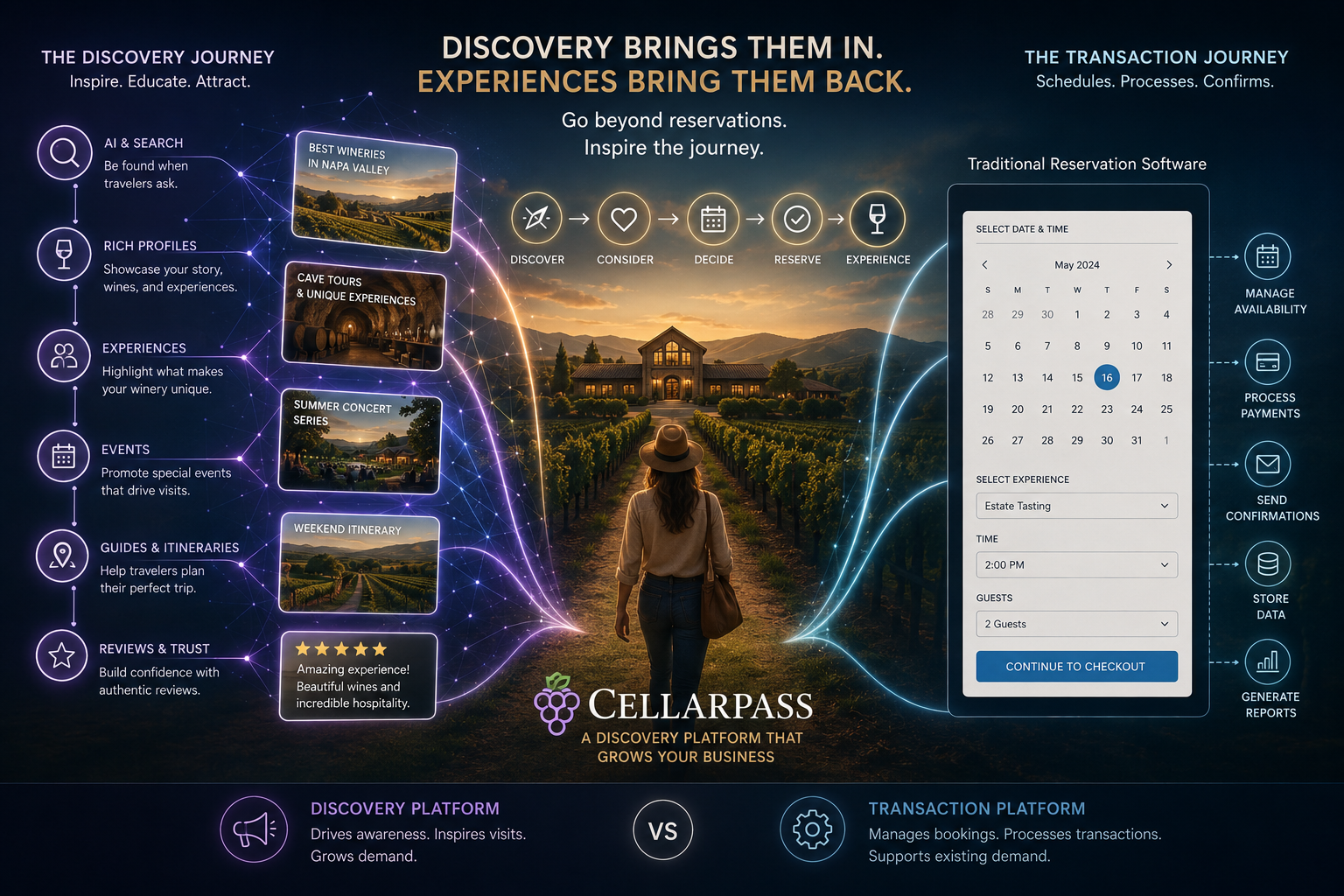
Platforms like CellarPass help wineries:
If your goal is to increase winery visits and strengthen wine club member engagement, your booking and CRM infrastructure must support it.
Focus on exclusive experiences, visitation-based perks, and personalized hospitality rather than price reductions. Access outperforms discounts in driving loyalty.
Behavior-driven engagement. Using visit frequency and purchase history to trigger invitations and perks significantly improves winery membership retention.
Large events still have value, but smaller curated experiences typically generate higher visitation consistency and stronger member loyalty.