As tasting room traffic slows and consumer habits evolve, wineries need to rediscover an old-fashioned strategy.

For years, the wine industry's direct-to-consumer strategy followed a familiar formula: create a beautiful tasting room, offer exceptional wines, build a loyal wine club, and welcome visitors who traveled to wine country. It was a successful approach during a period when wine tourism was flourishing and consumers were eager to discover their next favorite winery.
But the landscape has changed.
Today's consumers are more selective about discretionary spending, wine country tourism faces increasing competition, and traditional tasting room traffic can no longer be taken for granted. Wineries that once enjoyed a steady stream of visitors are finding themselves competing for fewer opportunities to make a personal connection.
The wineries positioning themselves for success aren't simply waiting for customers to return. They're finding creative ways to get in front of them.
And for many wineries, that means something the industry used to do exceptionally well: getting back out on the road.
According to Silicon Valley Bank's 2026 Direct-to-Consumer Wine Report, which surveyed 450 family wineries, the industry is experiencing a significant divide.
The top quartile of wineries reported 22% growth in direct-to-consumer revenue, while the bottom quartile experienced a 13% decline. Meanwhile, the median winery reported flat DTC sales performance.
That's a remarkable difference among businesses operating in the same challenging environment.
The report emphasizes the importance of customer relationships and execution, suggesting that success isn't determined solely by market conditions.
These figures don't prove that traveling tastings or off-site events caused stronger performance. But they do reinforce a critical lesson: wineries cannot rely on a recovering market to do the work of customer acquisition, engagement, and retention for them.
Not long ago, traveling wine tastings, regional wine dinners, consumer festivals, and winemaker visits were important parts of building a winery's following.
Winemakers and owners traveled to cities where their customers lived. They partnered with restaurants, hosted intimate gatherings, poured at consumer events, and introduced their wines to people who might never have considered visiting their vineyards.
These experiences created something that digital advertising and email campaigns struggle to replicate: a genuine human connection.
Somewhere along the way, many wineries became increasingly dependent on getting consumers to visit them.
But why should someone have to travel hundreds of miles to discover your wines for the first time?
Consider a winery in Napa Valley with an enthusiastic customer base in Seattle, Denver, Phoenix, or Dallas. Rather than waiting for those customers to book another wine country vacation, why not bring the winery experience directly to their community?
A winemaker dinner at a respected local restaurant, an intimate tasting at a private venue, or a collaborative event featuring several wineries can introduce the brand to dozens of potential customers in a single evening.
And the benefits can extend well beyond the bottles sold that night.
A successful event can generate new wine club prospects, reconnect existing members, encourage referrals, and give attendees a compelling reason to visit the winery on their next trip.
The next great winery customer may not be planning a trip to wine country. That doesn't mean they aren't interested in discovering exceptional wine.
There's another reason traveling events deserve renewed attention: your existing customers may already be concentrated in markets worth visiting.
Look at where your wine club members and repeat purchasers live. Are there clusters in metropolitan areas that could support a regional event?
Consider reaching out to those members and inviting them to bring friends, colleagues, or neighbors to a special tasting with the winemaker.
Imagine hosting an evening in Portland with 25 existing members, each encouraged to invite another couple. Suddenly, your winery has an opportunity to introduce its story and wines to an entirely new group of consumers, supported by the enthusiasm of people who already love the brand.
This approach transforms wine club members from passive subscribers into active participants in growing the winery's community.
It also sends an important message: you value your customers enough to visit them rather than always expecting them to visit you.
Of course, these gatherings need thoughtful planning, realistic budgets, and compliance with applicable alcohol service and sales regulations. Not every event needs to produce an immediate profit to provide value, but every event should have clear objectives and measurable results.
1. Bring back the traveling winemaker dinner. Partner with restaurants in cities where you already have customers. Create a multi-course pairing dinner that introduces the wines, tells the winery's story, and encourages guests to maintain a relationship after the event.
2. Organize regional wine club gatherings. Visit markets with strong member concentrations and host exclusive experiences. Encourage members to invite prospective new customers and make the event feel like a celebration rather than another sales presentation.
3. Collaborate with other wineries. Share event costs, audiences, and marketing responsibilities with complementary producers. A regional wine showcase featuring several wineries can create a stronger consumer attraction than a single-brand event.
4. Participate in consumer-focused festivals and community events. Prioritize events that allow meaningful interaction with guests, rather than simply pouring samples for large crowds. The goal should be developing relationships that can continue long after the festival ends.
5. Build partnerships outside wine country. Boutique hotels, culinary schools, private clubs, lifestyle organizations, and specialty retailers can introduce your winery to audiences who may not be actively searching for wine experiences.
The common thread is simple: make it easier for people to discover your winery by meeting them where they already spend their time.
For many wineries, an event calendar is still primarily a schedule of activities happening at the estate.
Harvest celebrations, seasonal dinners, release parties, vineyard tours, and live music are all valuable reasons to visit. But a truly effective calendar should also include opportunities to reach consumers beyond the property.
Think of your event strategy as serving two distinct objectives.
Your on-property experiences deepen the connection with visitors, showcase the destination, and create opportunities for immediate purchases and wine club memberships.
Your off-property experiences introduce the winery to new audiences, strengthen relationships in existing customer markets, and provide reasons for consumers to eventually visit in person.
These strategies should complement one another.
A guest who discovers your winery at a restaurant dinner in Seattle might become a wine club member, attend a future event in Portland, and eventually book a premium tasting when visiting Napa Valley.
Rather than treating each experience as a standalone transaction, think of it as part of a continuing customer relationship.
Getting out on the road is only part of the equation. Consumers also need to know where you're going, what you're offering, and how to participate.
A compelling event can fall short if potential attendees never discover it or encounter a confusing registration process.
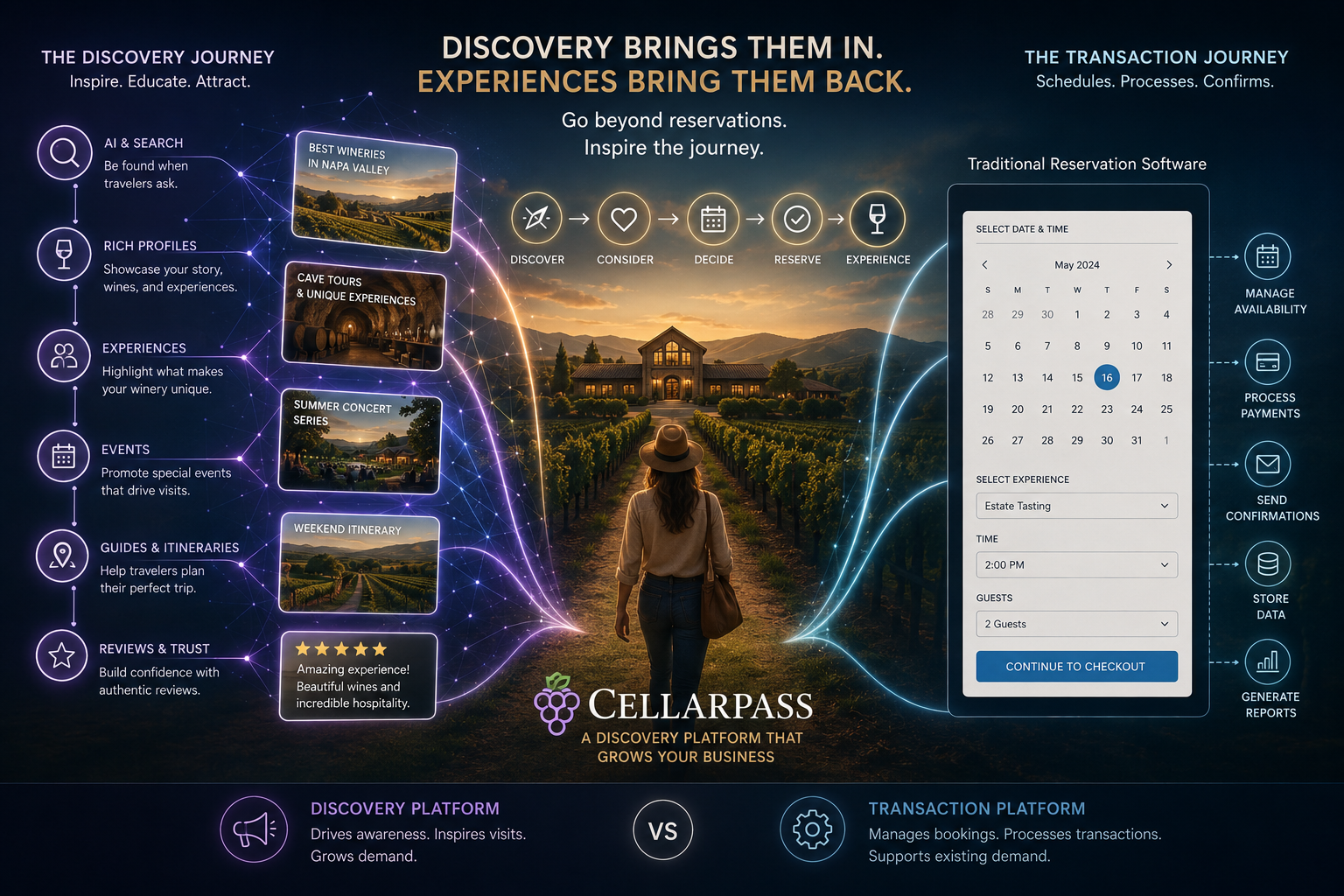
Wineries should promote traveling events through their own customer lists, restaurant and venue partners, regional organizations, social media, and consumer-facing event discovery platforms.
Event information should clearly communicate the experience, location, date, availability, and ticket options. Mobile-friendly registration is particularly important for guests discovering an event while browsing on their phones.
This is where platforms such as CellarPass can support a broader event strategy, helping wineries promote bookable experiences and manage ticket registration while connecting consumers with opportunities to engage.
The goal isn't simply to fill seats at a dinner or tasting. It's to remove obstacles between consumer curiosity and meaningful participation.
A traveling tasting with 40 attendees may look modest compared with a busy Saturday at the winery. But attendance alone doesn't tell the whole story.
Did the event introduce your wines to first-time customers? Did existing members bring friends? Did guests purchase wine, express interest in membership, or schedule future visits?
Most importantly, did the experience create relationships your winery can continue developing?
Before organizing a traveling event, establish measurable goals. Track attendance, costs, direct sales, new customer contacts collected with permission, subsequent purchases, club inquiries, and repeat engagement.
When measured over time, these results can help determine which geographic markets, partnerships, and event formats deserve additional investment.
A well-executed off-site tasting shouldn't be viewed only as an evening of wine sales. It can be an investment in future direct-to-consumer relationships.
Beautiful tasting rooms, memorable hospitality, and exceptional wines will always be important elements of the winery experience.
But in a competitive market, those strengths alone may not be enough.
The wine industry has spent decades encouraging consumers to explore wine country. Perhaps it's time to devote just as much energy to bringing wine country to consumers.
That might mean a winemaker flying to Chicago for a restaurant dinner, a winery owner hosting club members in Seattle, or several small producers organizing a collaborative tasting in Southern California.
It requires planning, personal effort, and a willingness to invest in relationships before expecting an immediate return.
Yet these are the very activities that helped countless wineries build loyal followings long before today's digital marketing tools existed.
The wineries that thrive in the years ahead won't necessarily be those with the most elaborate tasting rooms or the largest advertising budgets. They'll be the ones that consistently create reasons for consumers to discover, experience, and remember their wines.
So as you begin planning your 2027 hospitality and marketing calendar, ask yourself one important question:
Where are our customers—and what are we doing to go meet them?
Because your next great customer may not be coming to wine country anytime soon.
Maybe it's time you went to them.