Wine sales aren't up to you: focus on flexible tastings, strong teams, and guest relationships to thrive in 2026 and beyond.
It is hard to ignore the headlines. Every week seems to bring a new article declaring that the wine industry is losing traction, that sales are falling, or that consumers are moving on. While these narratives are easy to consume, they can also become self-fulfilling if left unchallenged.
The most productive response is not fear or retreat. It is to question broad claims, look closer at your own business, and create a clear action plan that positions you as the exception rather than another statistic. The wineries that succeed are rarely the ones waiting for conditions to improve. They are the ones adapting, focusing on what they can control, and building stronger connections with their guests and teams.
The wine industry has never lacked passion. It is built on craft, agriculture, hospitality, and human connection. Yet in recent years, it has become easy to dwell on challenges: rising costs, changing consumer behavior, staffing shortages, and market uncertainty. While those realities exist, an overemphasis on the negative can quietly shape decision making in ways that limit growth.
At CellarPass, we believe the wineries that will thrive in 2026 and beyond are the ones that intentionally focus on what is working, what is controllable, and what strengthens relationships. Positivity is not denial. It is a strategic mindset grounded in psychology, hospitality, and sustainable sales.
Psychologically, people perform better when they feel progress instead of pressure. Research consistently shows that small wins create momentum. When teams see tangible results, even modest ones, dopamine is released in the brain, reinforcing motivation, creativity, and engagement. The same principle applies to guests.
Wine is an emotional purchase. Guests buy when they feel seen, relaxed, and connected. A tasting room culture that emphasizes optimism, curiosity, and relationship building creates trust. Trust leads to longer conversations. Longer conversations lead to higher average order values and repeat visits.
Negativity narrows focus. Positivity expands it. When teams are encouraged to look for opportunities instead of obstacles, they are more likely to notice guest cues, suggest the right wine, and invite future engagement.
For years, the industry leaned heavily on large-scale events as a way to drive exposure and volume. While those events can be exciting, they are also expensive, staff intensive, and often overwhelming for both guests and teams. High foot traffic does not automatically translate into high sales, especially when staff is stretched thin and conversations are rushed.
Smaller, thoughtfully designed experiences often outperform large events on profitability and relationship depth. Examples include:
These experiences create a sense of exclusivity and belonging. Psychologically, scarcity and personalization increase perceived value. Guests feel chosen rather than processed. Staff can engage meaningfully instead of managing chaos. Sales conversations feel natural rather than transactional.
The result is often fewer guests, stronger relationships, higher conversion rates, and more manageable operations.
One of the most powerful shifts wineries can make is reframing the tasting room from a point-of-sale into a relationship hub. The goal is not to sell the most wine today, but to build the strongest connection that leads to sales over time.
This means:
Psychologically, people are more likely to buy from brands that reflect their identity. When guests feel understood, they are more open to commitment, whether that is a bottle purchase, a shipment, or a return visit.
No tasting room team succeeds without a clear plan from leadership. Training cannot be reactive or limited to product knowledge alone. It must start with management defining what success looks like and how each role contributes to it.
Effective training programs in 2026 will focus on:
When management models these behaviors, teams follow. When leadership is unclear, inconsistent, or purely transactional, staff disengages.
Bonuses are helpful, but they are short-term motivators. Career growth is a long-term driver of loyalty and performance. Psychologically, people are more invested when they see a future version of themselves that is better than the present.
A career roadmap might include:
Importantly, growth does not mean piling on mundane tasks. That leads to burnout, not engagement. Advancement should come with increased responsibility, decision making, and trust.
When employees feel trusted and challenged, they become more valuable to the business. They also become ambassadors for your brand, both inside and outside the tasting room.
Empowered staff perform better under pressure. When employees understand the why behind decisions and are given room to think, they adapt more effectively to real-world guest interactions.
This includes:
Psychologically, autonomy increases job satisfaction and accountability. Guests sense confidence and authenticity, which directly impacts purchasing behavior.
The wineries that will succeed in 2026 are not ignoring reality. They are choosing where to place their energy. By focusing on small wins, meaningful relationships, smart events, and intentional staff development, wineries can build resilient businesses that grow steadily rather than swing wildly.
Optimism, when paired with strategy, is not naive. It is practical, profitable, and human. And in an industry built on hospitality, human connection will always be the most valuable asset.
No winery succeeds alone. The most effective tasting rooms surround themselves with partners who understand hospitality, technology, and the evolving psychology of today’s wine consumer. This is where CellarPass becomes more than a platform. It becomes an extension of your team.
CellarPass works alongside wineries by sharing proven tips and best practices drawn from thousands of tasting rooms and events. From feedback on guest behavior to insights into what types of experiences convert best, the goal is simple: help you make smarter decisions with less guesswork.
Beyond insight, CellarPass helps amplify your efforts. Whether you are promoting a small, intimate event or refining your tasting room strategy, CellarPass supports your marketing with visibility, tools, and guidance designed to attract the right guests, not just more guests.
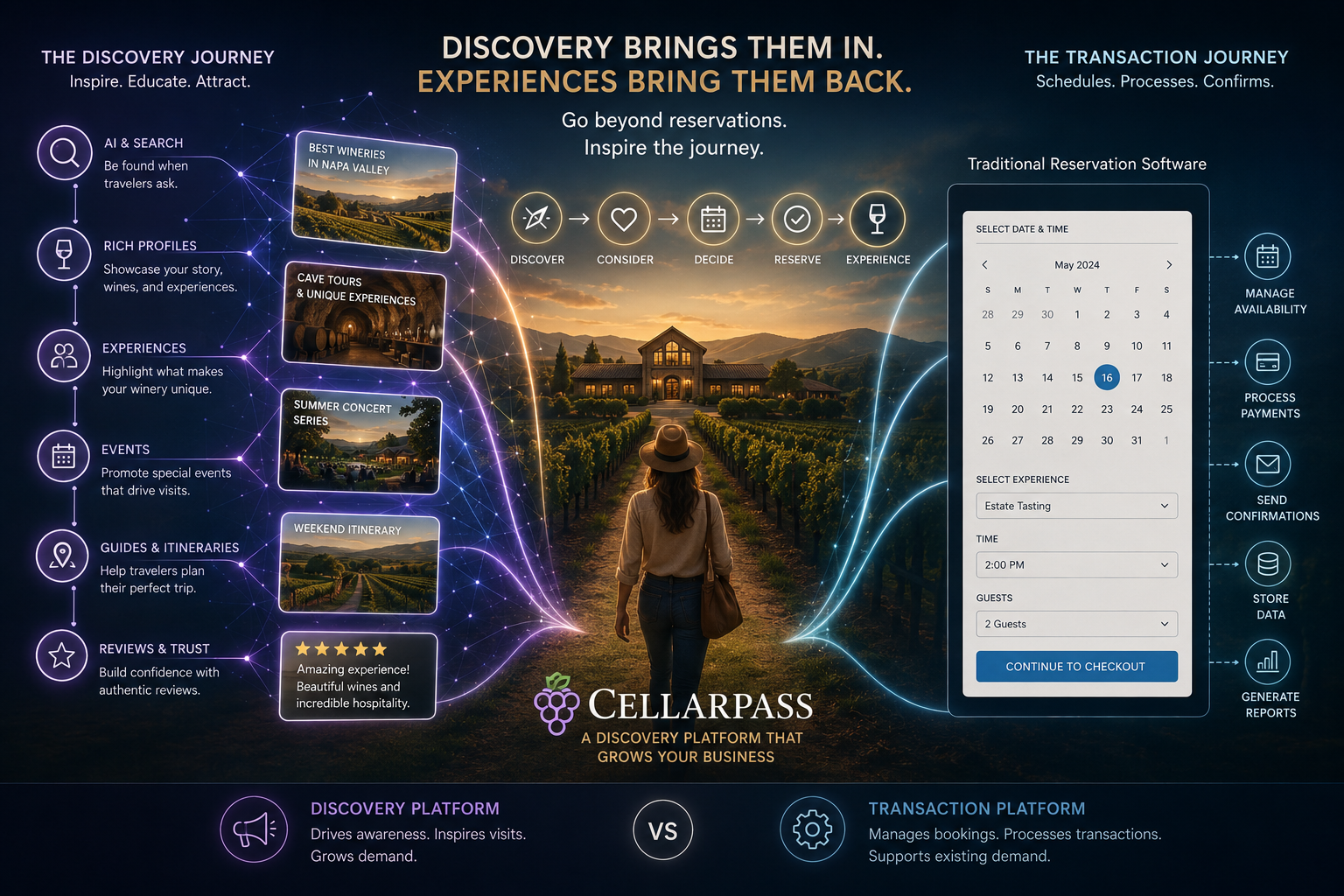
CellarPass is not like traditional software platforms that hand you tools and expect you to figure out the rest on your own. There is no one-size-fits-all playbook in wine hospitality, because not all properties are the same and not all events resonate with every type of wine consumer.
Instead, CellarPass takes the time to understand your property, your brand, your capacity, and your target demographics. What works for a small, appointment-only estate may not work for a high-traffic tasting room or an urban wine lounge. CellarPass helps you identify which types of events and experiences make sense for your business, based on real-world data, guest behavior, and industry insight.
This collaborative approach removes much of the trial and error that costs wineries time, money, and staff morale. You are not just given software. You are given guidance, perspective, and support to design events and experiences that align with your goals and resonate with the right guests.
Think of CellarPass as a trusted sounding board, a marketing ally, and a resource for continuous improvement. When your team feels supported and informed, it shows in the guest experience and ultimately in your sales.
CellarPass is proud to support wineries that choose progress over pessimism and relationships over transactions. The future of wine is still bright for those willing to build it thoughtfully.