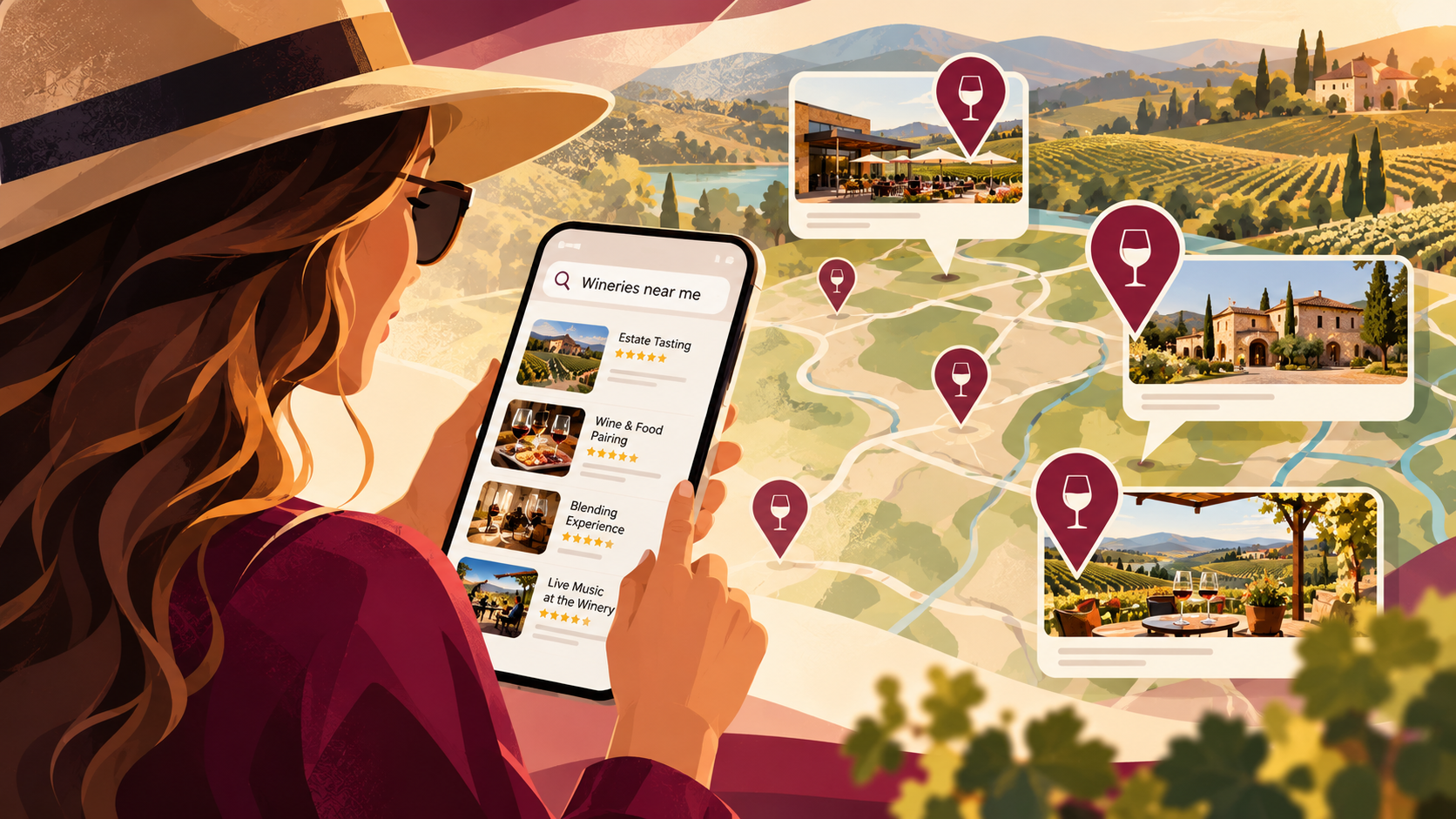
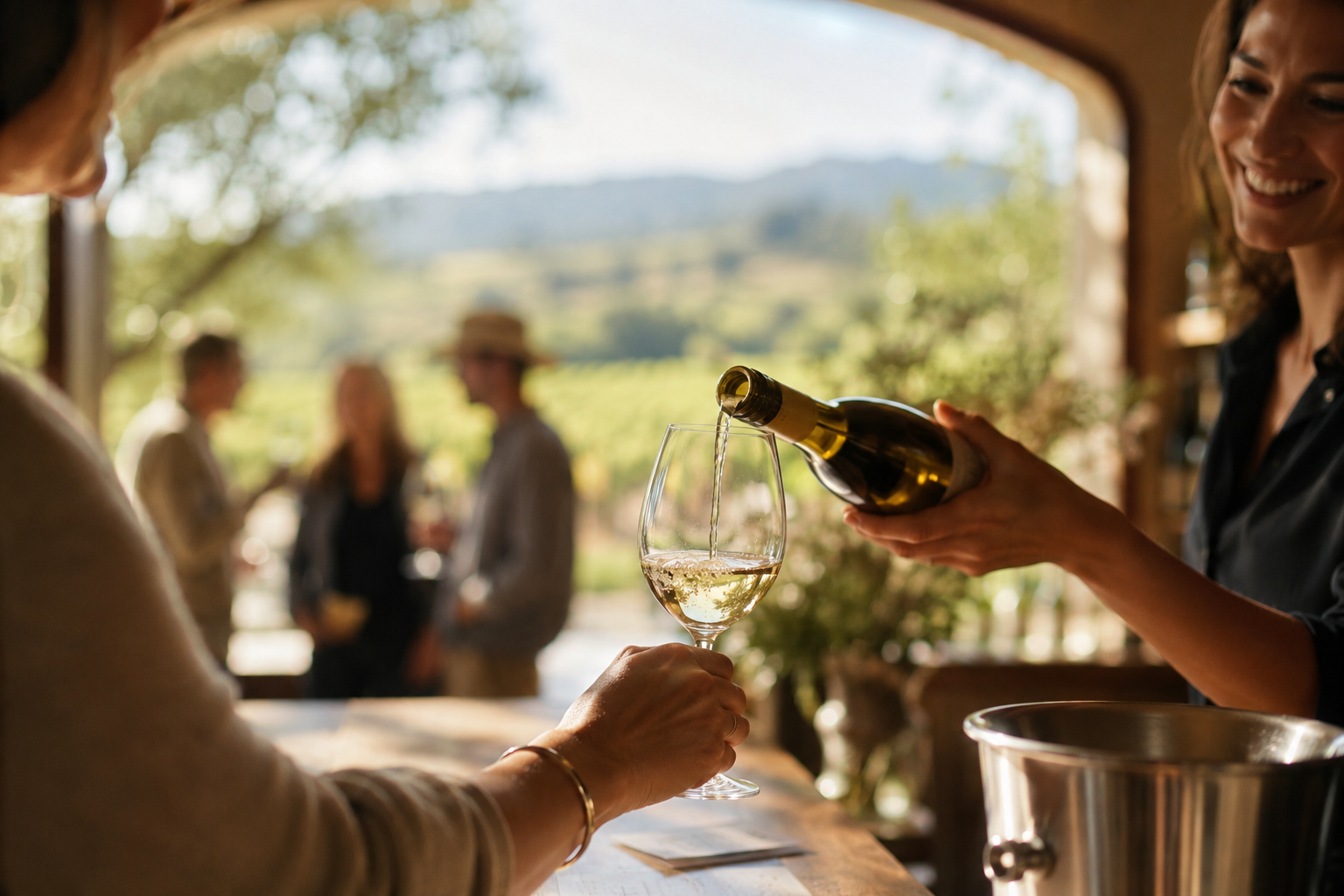
Tasting rooms didn’t stall by lacking traffic. They stalled by chasing the wrong guests and closing too soon.
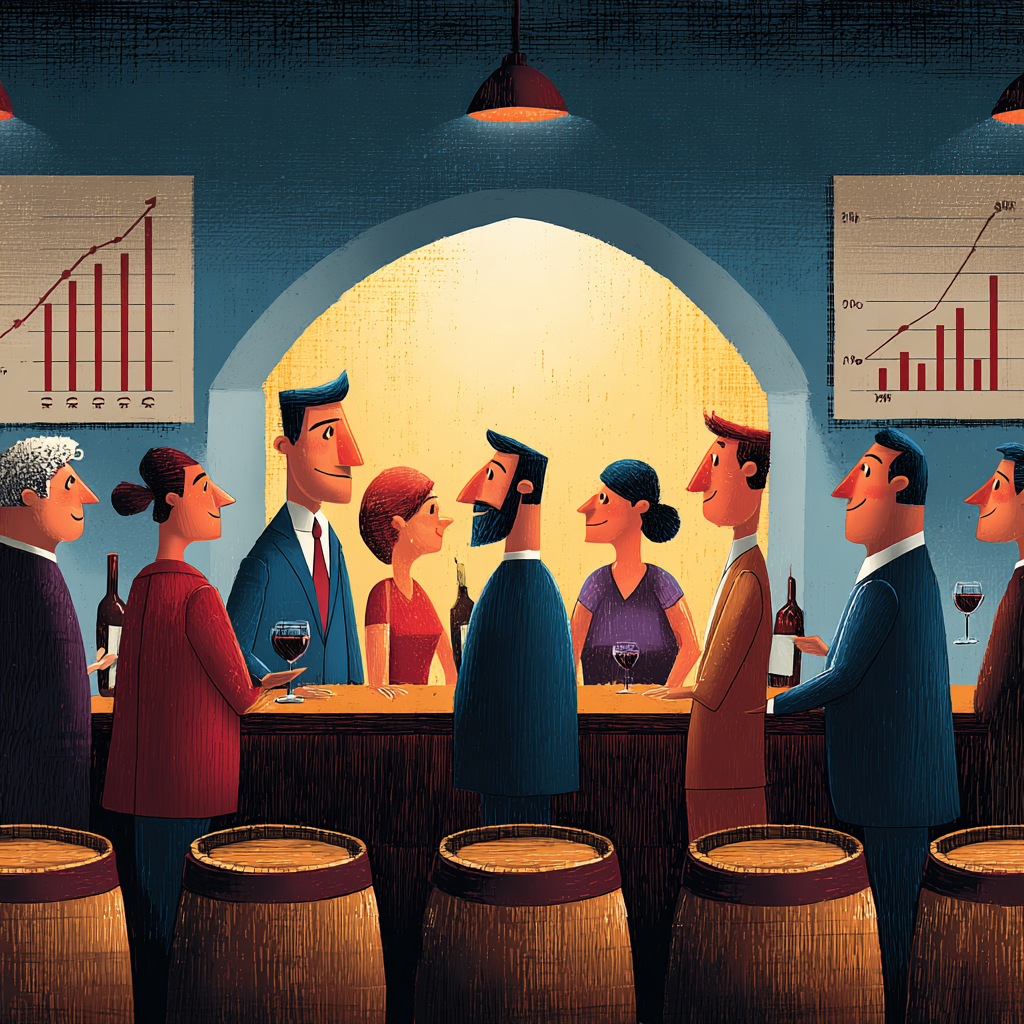
For the past five years, many tasting rooms have been optimizing for control instead of connection.
Reservation-only access, tightly scripted experiences, and an aggressive focus on first-visit conversion were meant to protect brand value and maximize revenue. In practice, they often did the opposite. They reduced discovery, narrowed the audience, and turned what should have been a welcoming introduction into a managed transaction.
Wineries trained teams to deliver the entire brand story in one sitting and to close the sale before the guest left. But modern wine consumers do not want to be sold on the first date. They want to feel understood. They want space to explore. They want a reason to come back.
The result is a generation of tasting rooms that are busy but not growing. Polished, but forgettable.
The assumption that more traffic automatically leads to more growth has quietly failed many wineries. High volume changes behavior in ways that are easy to miss but hard to recover from.
As tasting rooms get busier, conversations shorten. Experiences become standardized. Staff focus on pacing rather than presence. Guests sense the urgency and respond by disengaging.
What was meant to feel personal begins to feel procedural.
Industry data supports this. While tasting room visitation has remained relatively stable, wine club conversion rates have declined, with averages between 8–10 percent of guests joining, and even fewer converting from casual or high-volume traffic. This demonstrates that more visitors does not automatically translate into more revenue per guest (SVB 2024 DTC Wine Report).
In an effort to protect revenue, many wineries treat the first visit as the moment that must produce a sale. Join the club now. Buy today. Commit before you leave.
For some guests, that works. For many others, it feels premature.
Discovery-driven consumers arrive curious, not committed. When curiosity is met with pressure, they retreat. Engagement drops. Trust stalls. Even when a purchase happens, it often lacks emotional attachment.
Worse, the guest may not return.
The irony is that in trying to secure immediate value, wineries often undermine long-term value. Passport and discovery programs demonstrate this: even with lower total visitor volume, wineries see orders increase by 15 percent, order conversion by 36 percent, wine case sales by 43 percent, and wine club signups by 48 percent. The takeaway is clear — the right guests matter far more than the most guests (DTC Wine Symposium, 2022).
Wine educators are often trained to tell the entire brand story on the first visit. The history, the vineyard details, the philosophy, the accolades.
Information is not the problem. Timing is.
Guests do not need the full story to feel connected. They need an opening chapter. When everything is revealed at once, there is nothing left to discover.
The strongest tasting rooms understand this intuitively. They do not present the brand as a finished narrative. They leave space.
A vineyard mentioned but not fully explored.
A library wine referenced but not poured.
An event hinted at, not promoted.
These moments create desire. Desire is what brings guests back.
CellarPass has long held the position that more volume does not necessarily translate into more sales per capita. In fact, the opposite is often true.
Guests who arrive through discovery channels behave differently. They are not racing a schedule. They are not confirming a pre-made decision. They are present.
Discovery guests engage longer, ask better questions, and form stronger emotional connections. Their conversion may not happen at the tasting bar. It often happens later, online, or on a return visit.
And when they come back, they rarely come alone.
The wineries seeing the strongest DTC performance today are not trying to win the first visit. They are trying to earn the second.
Wine educators in these tasting rooms are trained to listen, not close. To build rapport, not urgency. To invite curiosity, not commitment.
When guests feel no pressure to buy, trust grows. When trust grows, advocacy follows.
That advocacy is what drives the most valuable form of traffic: friends bringing friends. In fact, roughly 75 percent of wine club members are sourced through tasting room visits, making quality front-door traffic critical to long-term DTC revenue (SVB 2024 DTC Wine Report).
The tasting room is not a checkout counter. It is a relationship engine.
Its purpose is not to extract maximum value from a single visit, but to create enough connection that the guest wants the relationship to continue.
Over the past five years, many tasting rooms drifted away from this truth in pursuit of efficiency, predictability, and control. The wineries that are breaking through now are rediscovering something simpler.
They are reopening the front door to discovery.
They are prioritizing traffic quality over volume.
They are training teams to create reasons to return, not reasons to commit immediately.
Growth is no longer about how many guests you can process in a day. It is about how many guests want to come back.
And who they bring with them.
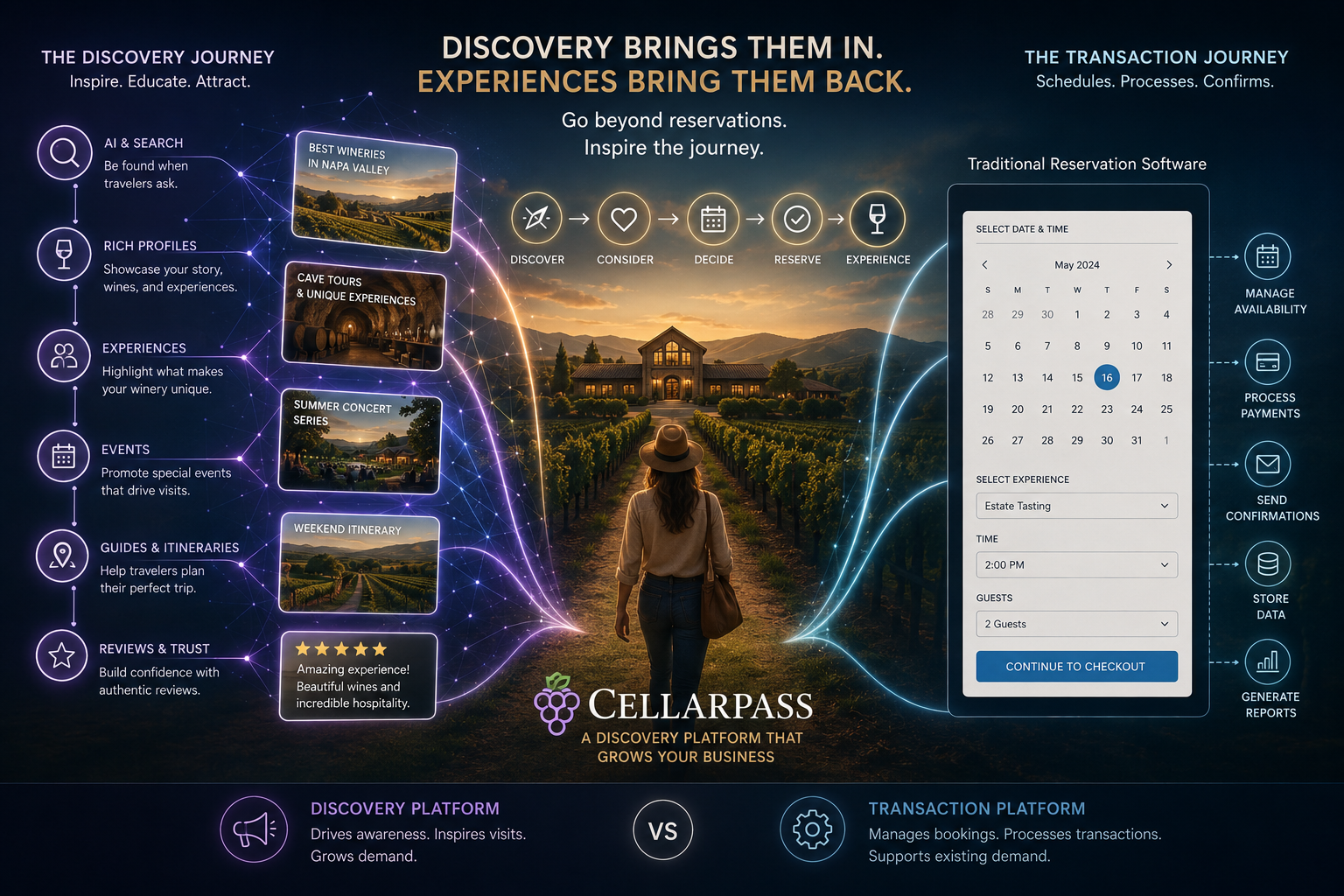
CellarPass was built for wineries that believe discovery should lead to relationships, not pressure.
Through curated discovery tools, passport programs, and regional experiences, CellarPass helps wineries attract guests who are open, engaged, and primed for connection. Not chaotic volume. Not discount-driven traffic. Just the right guests, at the right moment.
If your tasting room is polished but growth feels stuck, the issue may not be what happens at the table. It may be who is finding you in the first place.
CellarPass helps wineries restore discovery, improve traffic quality, and build the kind of momentum that brings guests back. With friends.