Avoid lost bookings and revenue: why all-in-one DTC platforms fall short for wineries.

Imagine hearing from a friend about an unforgettable Napa tasting experience. You click the link they shared, excited after reading about the winemaker and the wine’s accolades. You just realized you have the day off tomorrow and think, this is perfect — I have to go!
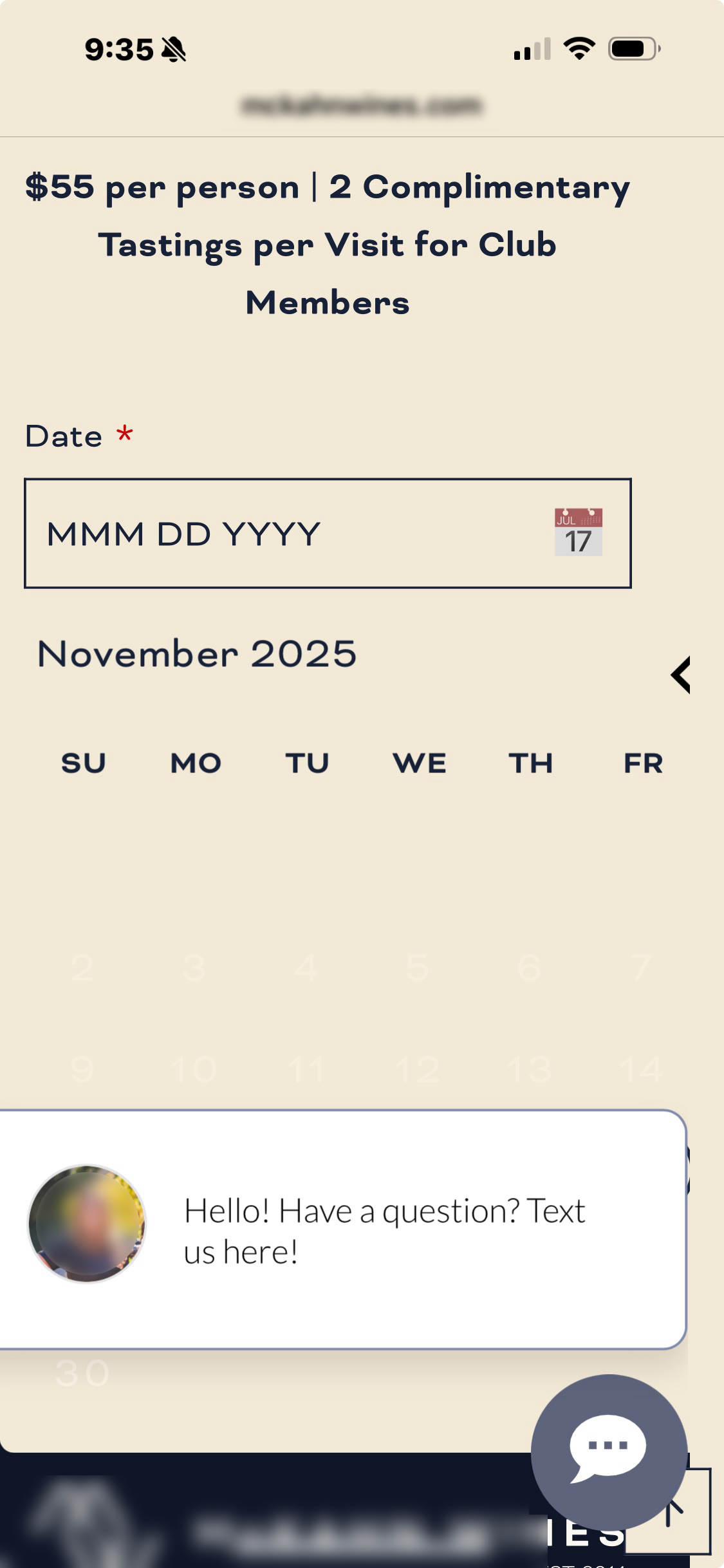
Then you see the booking page… clunky, confusing, frustrating. I can't select a date, can't change the month, the chat feature keeps getting in the way and the list goes on and on.
Do you fight through it, hoping to figure it out, or do you give up and book something else — something easier, simpler, and stress-free?
Bottom line: some of these issues are simple fixes for a web designer, but as a winery owner, consider the impact — how many reservations have been lost, and with them, the wine sales and club membership sign-ups that never happened.
According to stats from Arival, a popular trade site for travel agents and business owners, 82% of visitors would simply give up- that's a huge loss for you if you are using this booking engine.
In the world of direct-to-consumer wine sales, it’s tempting to think that one platform can do it all — manage your tasting room, eCommerce, reservations, ticketing, and memberships. Platforms like Commerce7 and OrderPort advertise themselves as “all-in-one” solutions, promising a single ecosystem to handle every aspect of your DTC operations. But in reality, trying to be everything for everyone often comes with serious pitfalls.
No system can truly excel at every function. When a platform attempts to manage every piece of your business, features often rely on multiple interdependent systems. This complexity can lead to limitations, workarounds, or functionality that simply doesn’t meet your team’s or your guests’ needs. Whether it’s bookings, ticketing, or memberships, the “jack of all trades” approach often means your team runs into frustrating trade-offs.
Reliability is critical. When your entire DTC ecosystem depends on a single platform, any network or system outage can halt tasting room operations, reservations, ticketing, and eCommerce. Platforms like Commerce7 and OrderPort have experienced downtime that prevents staff from seating guests or completing bookings. By using a specialized platform like CellarPass, which operates independently, you reduce this single point of failure and ensure your operations continue even if another system goes down.
Closely tied to uptime is the ability to complete transactions smoothly. All-in-one platforms often rely on specific payment services that, when disrupted, prevent guests from completing bookings or purchases. CellarPass decouples your booking and payment processes from these fragile networks, helping ensure guests can always book and pay, protecting your revenue and guest experience.
All-in-one platforms have to spread their development budget across many features. That means guest management or ticketing may not get the attention they deserve. CellarPass, by contrast, is purpose-built for guest management, ticketing, and event operations — so our roadmap is laser-focused on the features that matter to your tasting room, not diluted by eCommerce or membership priorities.
With a multi-purpose platform, support teams must cover a wide array of components — eCommerce, POS, reservations, memberships, and more. That means your requests may compete with clients requiring assistance with processing wine clubs, creating products or hosting onboarding or training sessions. Because CellarPass is focused on guest management, our support team has deep expertise in that domain, delivering faster and more effective help. Onboarding with CellarPass takes less than hour and ongoing support is always available with no wait time.
All-in-one solutions rarely handle guest-facing support. If a consumer has trouble booking, rescheduling, or understanding experiences, the burden falls to your team. CellarPass provides direct support to your guests — from booking to post-visit — so your staff can focus on wine and hospitality, not customer service logistics.
Booking engines must be intuitive and accessible. ADA compliance is essential: your widget must work for all guests, regardless of ability. Many embedded booking widgets from all-in-one platforms suffer from poor design, multiple unnecessary clicks, and confusing flows — which can frustrate users and drive them elsewhere. A bad UX isn’t just an inconvenience; studies in hospitality show that over 80% of online bookings are abandoned due to friction in the booking flow (hotel-online.com). With CellarPass, the booking experience is streamlined and accessible, helping minimize abandonment.
Speed and simplicity are key. Guests and club members want to check availability and book in as few steps as possible. Data shows that friction in checkout — extra form fields, slow page loads, too many clicks — drives abandonment (support.leonardoworldwide.com). When your booking flow is too slow or complicated, you lose not just the booking, but the downstream wine sales and membership opportunities that could come from that guest. CellarPass’s interface is built for conversion: fast, clean, and optimized to reduce drop-off.
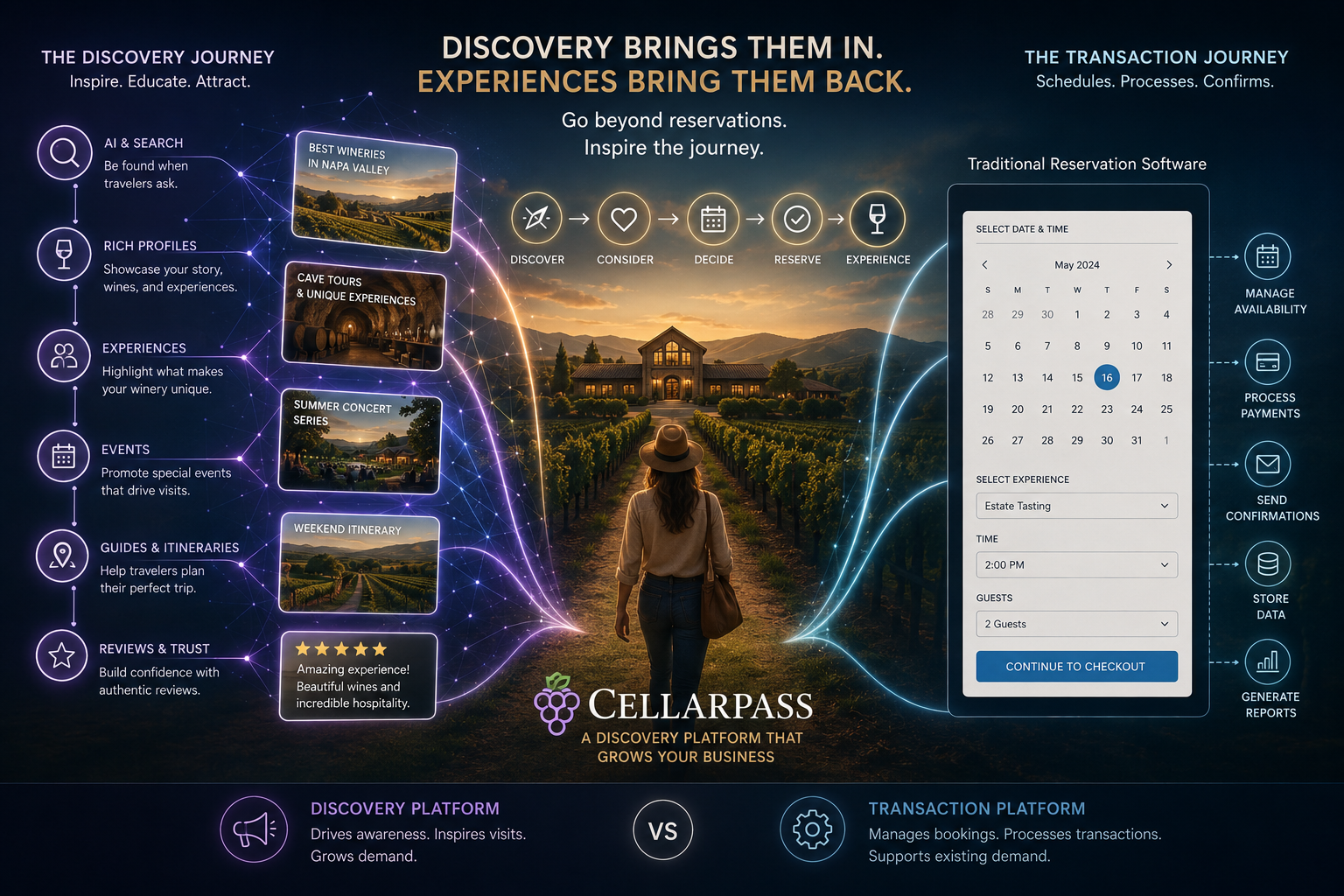
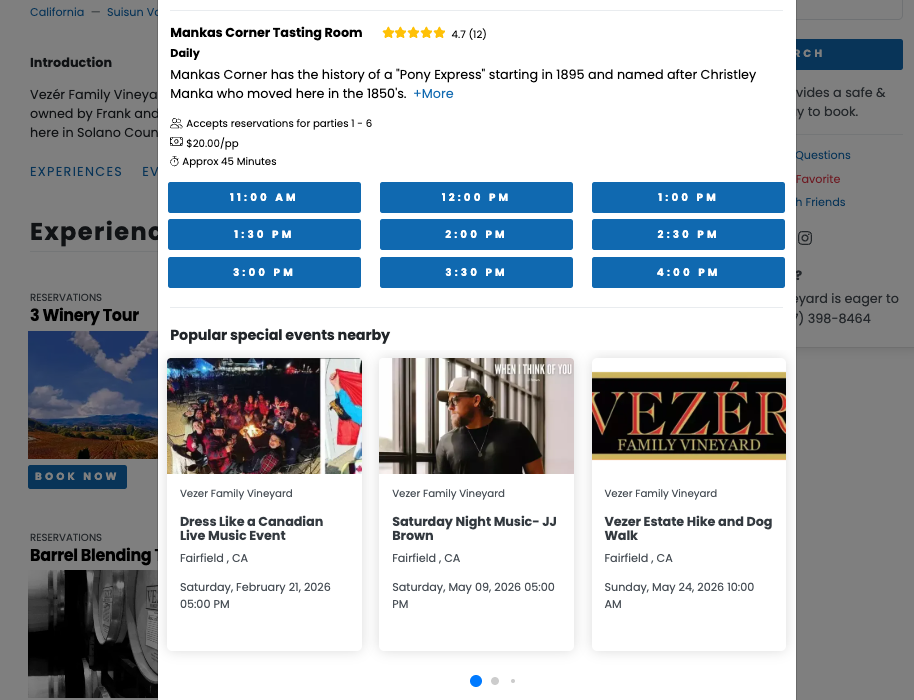
Unlike Commerce7 and OrderPort, which treat ticketed events like separate “products,” CellarPass provides a single widget displaying all experiences — reservations, standard tastings, and ticketed events. Guests don’t have to search for specific dates; they see everything at a glance. This visibility allows your booking engine to easily upsell guests from standard tastings into higher-priced special events, which are known to increase wine sales and drive club membership growth. Studies show that clear visibility of offerings can increase conversion by up to 20%, directly impacting revenue from ticketed events and tastings.
CellarPass doesn’t force you to replace your existing eCommerce, POS, or membership system. Instead, we integrate with your best-of-breed tools, layering in efficient, high-conversion guest management, tickets, and event operations. That flexibility reduces risk and preserves your core operations while improving the guest experience.
Booking friction isn’t just a minor annoyance — it’s a major revenue leak. Here’s what the data shows:
For a winery, each abandoned booking isn’t just a missed tasting fee — it's potential wine sales, ticket revenue, and club members lost.
Even small drops in bookings, poor UX, or inaccessible interfaces can significantly impact tasting fees, wine sales, and club membership growth.
All-in-one platforms like Commerce7 and OrderPort may promise convenience, but they come with real costs: limited features, stretched support, higher risk of downtime, poor UX, and fragmented event visibility. For wineries, these issues translate directly into lost reservations, lower wine sales, and fewer club members.
CellarPass is purpose-built for guest management and ticketing. We focus on intuitive booking experiences, high conversion, reliable uptime, accessibility, and direct guest support. By streamlining the booking process, showing all experiences in one place, and optimizing checkout, wineries can minimize abandonment, increase revenue, and grow their clubs. Don’t settle for a platform that tries to do it all but delivers less where it matters most.